A homeschool reading log is the simplest record you can keep, and one of the most satisfying to look back on. This free printable comes in three versions in one PDF — one for young readers, one for older readers, and one for the books you read aloud together. Download it below; no email required.
The three versions
Young reader
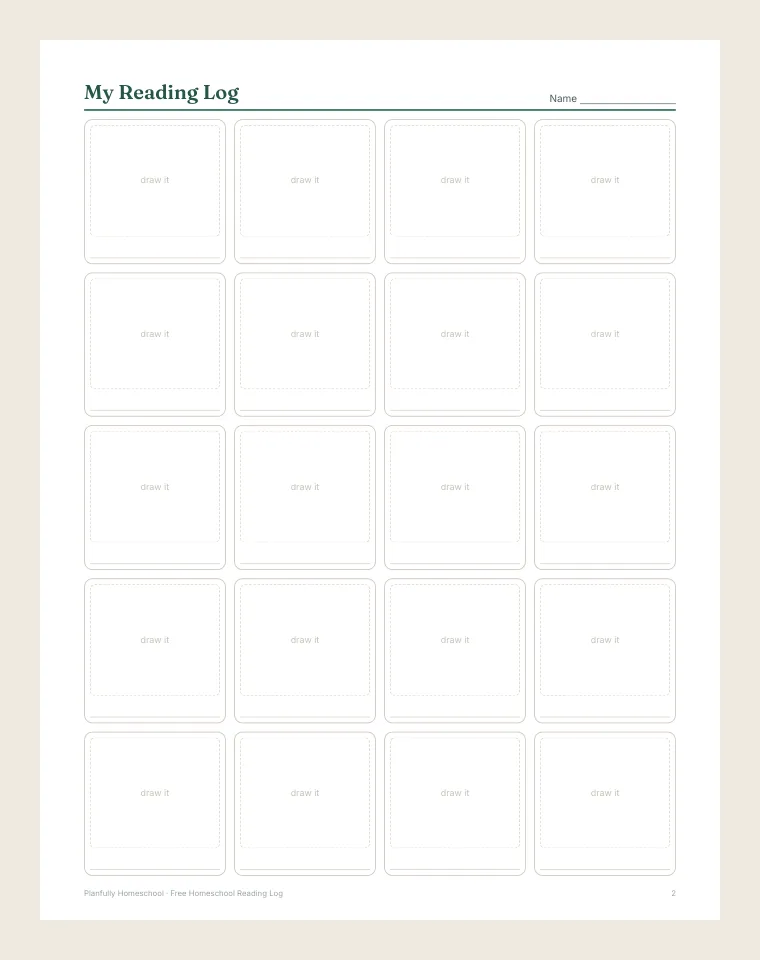
Twenty boxes per page. For each book, your child draws the cover or a favourite scene, and you write the title together underneath. It works for picture books, early readers and audiobooks alike, and it’s often the page children are proudest of at the end of the year.
Older reader
A table with title, author, pages, dates started and finished, a one-to-five rating and a short note. Older children can fill it in on their own, and it becomes a useful list when you write a reading list for a portfolio or report.

Family read-aloud
Track the books you read together: who chose it, when you started and finished, and everyone’s favourite part. Families who read aloud daily are often surprised by how many books they get through in a year.
How to use a reading log without it becoming a chore
Log when a book is finished, not every day. Daily minute-counting turns reading into homework for many kids. A single line when a book is done is enough for most families.
Count every kind of reading. Picture books, graphic novels, audiobooks, read-alouds and re-reads of a favourite all belong on the log. The point is a record of a reading life, not a test of difficulty.
Keep it where the books are. A clipboard by the bookshelf or a page tucked into the front of a binder means it actually gets filled in.
Look back together. Once a month, read the list aloud. Children who see a long list of finished books tend to want to add to it.
Use the rating column honestly. A one-star book is useful information when you choose next year’s reading.
What a reading log is good for
Beyond the satisfaction of a long list, a reading log helps you notice patterns: a child who only reads one series, a subject they keep coming back to, a jump in reading level after the winter. It also gives you a ready-made reading list if you keep a portfolio or write a year-end summary. Some states ask homeschoolers to keep records of materials used; a reading log is an easy part of that. Requirements vary, so check your own state’s rules if you need formal records.
Printing tips
The PDF is US Letter. Print the young-reader page in colour if you can — children love colouring the boxes — and print the older-reader and family pages in black and white. Print as many copies as you need for your own family. Three-hole punch them for a binder, or staple a few pages into a simple booklet for each child.
Want reading logged with everything else?
If you’re already keeping attendance or hours, it’s easier to keep books in the same place. The Homeschool Record Keeping System has a Books Read tab for every child, and its Year-End Summary lists each child’s books automatically alongside their attendance, hours and activities.
Want a version that counts books and pages for you? Try the Homeschool Reading Log & Book Tracker.